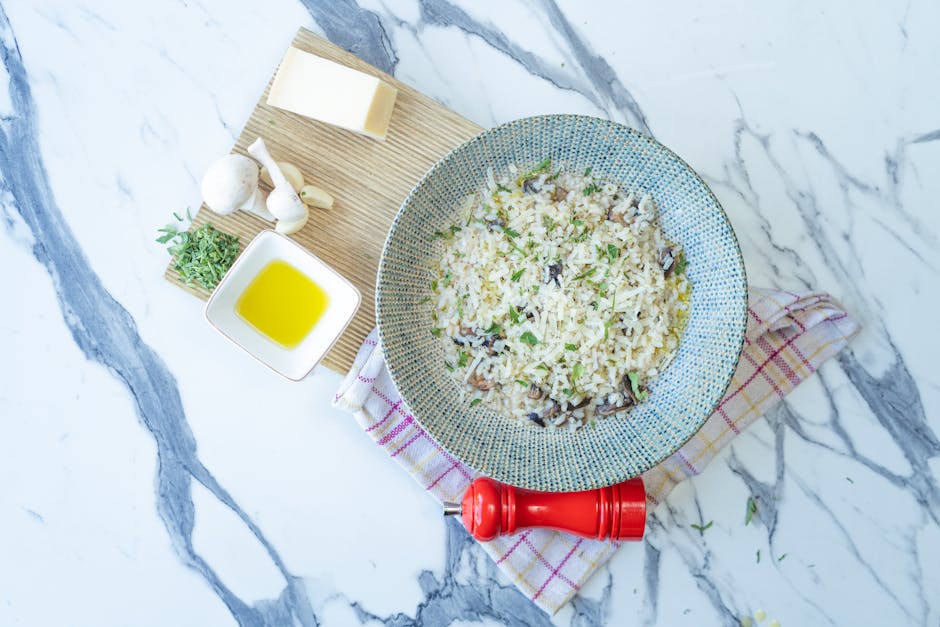
Vegan Mushroom Risotto (Creamy, 40 Minutes)
Risotto gets its creamy texture from the starch released by Arborio rice as it’s cooked slowly with gradually added stock — not from butter or cream. This means a properly made risotto is already nearly vegan; the finishing touches (nutritional yeast instead of Parmesan, vegan butter instead of dairy) are straightforward substitutions. Porcini mushrooms steeped in hot water produce an intensely flavored stock that becomes the base of the risotto.
Ingredients
- ½ oz (15 g) dried porcini mushrooms
- 1½ cups (360 ml) boiling water (to steep porcini)
- 3–4 cups (720–960 ml) vegetable broth (warm)
- 1½ cups (300 g) Arborio rice
- 8 oz (225 g) fresh cremini or portobello mushrooms, sliced
- 2 tablespoons olive oil, divided
- 1 tablespoon vegan butter
- 1 large shallot (or small onion), finely diced
- 3 garlic cloves, minced
- ½ cup (120 ml) dry white wine or vegetable broth
- 3 tablespoons nutritional yeast
- 1 tablespoon vegan butter (finish)
- 1 tablespoon lemon juice
- Fresh thyme or parsley
- Salt and black pepper
Method
- Steep porcini. Pour boiling water over dried porcini mushrooms. Let steep for 20 minutes. Remove mushrooms (chop and set aside) and strain the soaking liquid through a coffee filter or fine-mesh strainer lined with paper towel to remove grit. Add strained porcini liquid to vegetable broth — this is your risotto stock.
- Cook fresh mushrooms. Heat 1 tablespoon olive oil in a large skillet over high heat. Add sliced fresh mushrooms in a single layer. Don’t stir for 2 minutes — let them brown. Stir and cook another 2–3 minutes until golden. Season with salt. Add chopped rehydrated porcini. Set aside.
- Start the risotto. In a wide, heavy-bottomed pan, heat remaining olive oil and vegan butter over medium heat. Add shallot; cook for 3–4 minutes until soft. Add garlic; cook 1 minute.
- Toast the rice. Add Arborio rice. Stir for 1–2 minutes until the edges of the grains look slightly translucent and smell faintly nutty. This toasting step helps the rice cook evenly.
- Add wine. Pour in white wine. Stir constantly until absorbed — about 1–2 minutes.
- Add stock gradually. Add warm stock one ladle (about ½ cup) at a time. Stir frequently (not constantly, but don’t walk away). Each addition should be mostly absorbed before adding the next. This process takes 20–25 minutes. Use all the stock you need until the rice is al dente — tender with a slight chew in the center.
- Add mushrooms. Stir in cooked mushrooms in the last few minutes of cooking.
- Finish. Remove from heat. Stir in nutritional yeast, remaining vegan butter, and lemon juice. The risotto should be loose and creamy — it thickens quickly. Add a splash of stock if needed to reach the right consistency: it should flow slowly off a spoon.
- Taste and serve. Adjust salt, pepper, and lemon. Serve immediately in warm bowls with fresh thyme or parsley.
Tips
Porcini soaking liquid is the secret. The liquid left after rehydrating dried porcini mushrooms is intensely flavored. Using it as part of the stock gives the risotto a depth of mushroom flavor that plain vegetable broth doesn’t achieve.
Warm stock. Adding cold stock to the hot rice shocks it and interrupts even cooking. Keep the stock warm in a separate pot on low heat throughout.
Ladle-by-ladle. The gradual addition of stock is what agitates the starch out of the rice, producing the creamy texture. Don’t add all the stock at once.
Nutritional yeast = savory depth. It adds the umami that Parmesan provides in the original — not a cheese flavor, but savory richness.
Don’t overcook. Al dente (slightly firm in the center) is the correct texture for risotto. Overcooked risotto becomes stodgy.
Variations
Asparagus and lemon: Replace mushrooms with blanched asparagus. Add lemon zest with the lemon juice.
Truffle: Add 1 tablespoon of truffle oil at the finish — a small amount is very powerful.
Butternut squash: Roast diced butternut squash. Stir half through the risotto at the end and use half as a topping.
Cooking for a date or anniversary? This risotto is the main course in our vegan date-night dinner, with saffron and truffle-oil upgrades and a full timeline.
FAQ
Can I make risotto ahead? Risotto is best made and eaten immediately. It can be refrigerated, but the texture changes — it thickens and becomes gluey. To revive, reheat with a splash of warm broth over medium heat, stirring continuously.
What is Arborio rice? Arborio is a short-grain, high-starch Italian rice used specifically for risotto. The high starch content creates the creamy texture. Don’t substitute long-grain rice — the result will be watery, not creamy.
For another Italian-inspired vegan dish, see the vegan spaghetti bolognese. Browse all vegan main meals at the main meals hub.