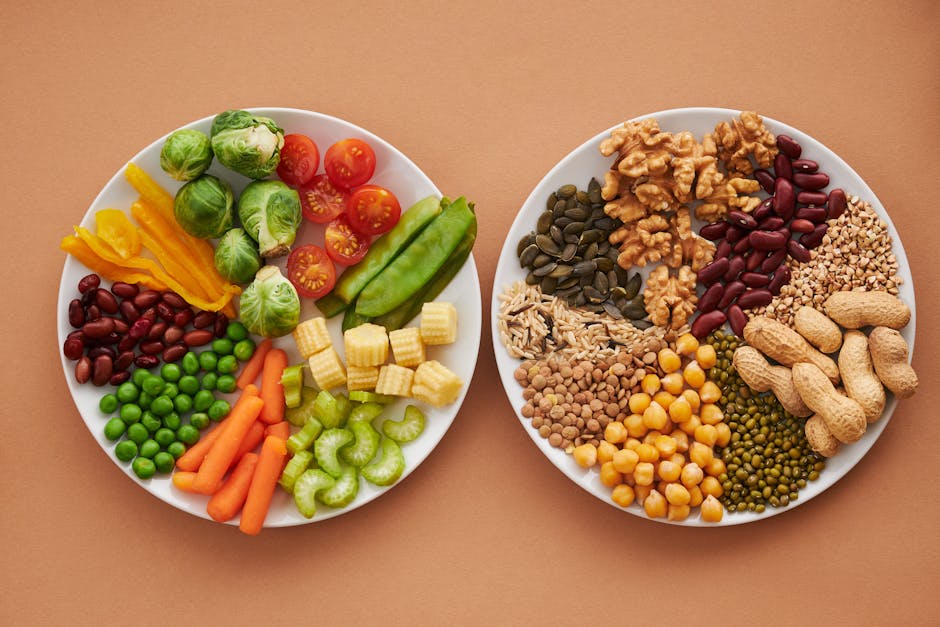
Vegan Macros: Protein, Fat, Carbs, and Fibre
A useful starting macro split for a whole-food plant-based diet is roughly: 20–25% calories from protein, 25–35% from fat, 45–55% from carbohydrates, with a fibre target of 40–60g/day. These are reference ranges, not prescriptions — individual needs vary by activity level, training goals, body composition target, and health context. This guide walks through reasonable targets per macro, the best vegan sources, what the published evidence supports, and how to adjust for muscle gain, fat loss, endurance training, and general health.
The starting framework
Per NIH ODS and the Institute of Medicine:
- Protein: Acceptable Macronutrient Distribution Range (AMDR) 10–35% of calories. RDA 0.8 g/kg body weight; athletic populations 1.2–2.2 g/kg.
- Fat: AMDR 20–35% of calories. Adequate Intake for omega-3 ALA: 1.6 g/day men, 1.1 g/day women; EPA+DHA via algae oil 250–500 mg/day.
- Carbohydrate: AMDR 45–65% of calories. Minimum for brain function ~130g/day; athletic populations may consume 300–600g/day.
- Fibre: AI 25 g/day women, 38 g/day men. Most vegan diets exceed these comfortably.
For an 80 kg adult eating 2400 calories/day, a sample split:
- Protein: 110g (18% of calories, 1.4 g/kg)
- Fat: 80g (30% of calories)
- Carbohydrate: 320g (53% of calories)
- Fibre: 50g
Protein: 1.0–1.6 g/kg as a default target
Per the Academy of Nutrition and Dietetics’ 2016 position: vegetarian and vegan diets meet protein needs across all life stages when calorie intake is adequate.
Practical targets:
- Sedentary adult: 0.8–1.0 g/kg/day
- Active adult / general health: 1.0–1.2 g/kg/day
- Resistance training / muscle gain: 1.6–2.2 g/kg/day per ISSN position
- Older adults (50+): 1.0–1.2 g/kg/day (higher than RDA per emerging research)
- Pregnancy: ~1.1 g/kg/day
Best vegan protein sources (per typical serving):
- Soy products: tofu, tempeh, edamame, soy milk, soy protein isolate (highest PDCAAS)
- Legumes: lentils, chickpeas, beans
- Seitan
- Pea protein powder, soy protein powder, hemp protein
- Whole grains (smaller per-gram contribution but additive)
- Nuts and seeds
A varied vegan day with 1 cup legumes, 1 cup tofu/tempeh, 1 cup grain, 2 oz nuts/seeds, and 2 servings vegetable yields ~90–110g protein.
For amino acid completeness see our complete amino acids for vegans deep-dive.
Fat: 25–35% of calories with attention to the type
Total fat target on a vegan diet is similar to general adult guidelines. The composition matters more than the total:
Healthy fat sources to emphasise:
- Monounsaturated: olive oil, avocado, almonds, cashews, peanuts
- Polyunsaturated omega-3: flaxseed, chia, hemp, walnuts (ALA); algae oil (EPA/DHA)
- Polyunsaturated omega-6: sunflower oil, soybean oil, sesame oil, most seeds and nuts (don’t need to chase; usually abundant)
Saturated fat to keep moderate:
- Coconut oil, palm oil — both high in saturated fat. Useful in cooking but not needed in large amounts.
- Vegan butter, vegan cheese — similar caution.
Trans fats to avoid:
- Partially hydrogenated oils — largely phased out in regulated markets but check ingredient lists on processed foods.
The American Heart Association’s 2021 dietary guidance and the EAT-Lancet Commission both emphasise type of fat over total fat — replacing saturated with mono- and poly-unsaturated reduces cardiovascular risk markers.
Practical fat targets:
- Whole-food plant-based pattern (Esselstyn-style): ~10–15% calories from fat (lowest end, used clinically for heart disease management)
- Standard plant-based: 20–35% calories from fat (most adults)
- Higher-fat low-carb plant-based: 35–45% calories from fat (uncommon, but viable)
For a 2400-calorie diet at 30% fat: 80g/day total fat. Most of that comes naturally from a varied diet with nuts, seeds, avocado, olive oil, and tofu — no need to chase or restrict obsessively.
Carbohydrates: usually the largest macro
Vegan diets tend to be naturally higher in carbohydrate than typical mixed diets — and this is fine. Carbohydrate is the body’s preferred fuel for moderate-to-high-intensity activity and supports brain function (the brain consumes ~120g glucose/day at rest).
Best carbohydrate sources:
- Whole grains: oats, brown rice, quinoa, whole-wheat pasta, farro, bulgur, barley
- Legumes: lentils, chickpeas, beans (also significant protein contributors)
- Starchy vegetables: sweet potato, potato, butternut squash, corn
- Fruit: all whole fruit; lower priority on fruit juice and dried fruit due to concentrated sugar
Refined carbohydrate to limit:
- White bread, white pasta (in large quantities)
- Sugar-sweetened beverages
- Sweetened breakfast cereals
- Candy, pastries, sugar-heavy desserts
The 2019 Lancet meta-analysis on dietary fibre and chronic disease (Reynolds et al.) reported that high-fibre, whole-grain-emphasising diets are associated with substantial reductions in cardiovascular disease, type 2 diabetes, colorectal cancer, and all-cause mortality. The mechanism is partly fibre-related, partly the broader micronutrient and phytochemical context of whole-grain foods.
For a 2400-calorie diet at 50% carbs: 300g/day. An athletic 70kg endurance runner training 1.5–2 hours/day might consume 6–10 g/kg/day of carbs (420–700g/day) for fuelling.
Fibre: the unsung macro
Vegan diets are typically high in fibre — frequently 40–60g/day, sometimes higher. The standard Western diet averages 15–20g/day. The Adequate Intake (AI) is 25g/day for women, 38g/day for men, but evidence supports benefits to 50g+ per day in the absence of digestive issues.
Fibre’s documented benefits (per Reynolds et al., 2019 Lancet meta-analysis):
- Lower cardiovascular disease incidence
- Lower type 2 diabetes incidence
- Lower colorectal cancer incidence
- Lower all-cause mortality
- Better gut microbiome diversity
Best fibre sources:
- Legumes (lentils 16g/cup; black beans 15g/cup)
- Whole grains (oats 4g/cup; quinoa 5g/cup)
- Vegetables (broccoli 5g/cup; brussels sprouts 4g/cup)
- Fruit with skin (apples, pears, berries)
- Chia seeds (10g per 2 tbsp)
- Avocado (10g per fruit)
Fibre transition note: A jump from 20g to 50g daily can cause bloating and digestive discomfort for the first 1–2 weeks. Increase gradually if starting from a low-fibre baseline. Drink adequate water — fibre needs water to work properly.
Calories: the often-overlooked macro
The most common error in early vegan transition is calorie under-eating. Plant foods are typically less calorie-dense than animal foods:
- Cooked chicken breast: ~165 kcal/100g
- Cooked lentils: ~115 kcal/100g
- Cooked broccoli: ~35 kcal/100g
- Cheese: ~400 kcal/100g
- Tofu: ~145 kcal/100g
Replacing a 600-calorie chicken-and-rice plate with a 350-calorie salad without compensating elsewhere produces fatigue within days. Eat to satiety; include calorie-dense plant foods (nuts, seeds, avocado, olive oil, peanut butter, tahini, dried fruit, plant-based meats when convenient) freely.
Adjusting macros for goals
Muscle gain
- Calories: +200–500 above maintenance
- Protein: 1.6–2.2 g/kg (probably the upper end given vegan protein digestibility)
- Carbs: 4–6 g/kg around training
- Fat: 0.8–1.0 g/kg
Fat loss
- Calories: 200–500 deficit
- Protein: 1.6–2.2 g/kg (preserves lean mass)
- Carbs: 2–4 g/kg
- Fat: 0.6–1.0 g/kg
- Fibre: emphasise to support satiety
Endurance training
- Calories: high (2500–4500 depending on volume)
- Carbs: 5–10 g/kg
- Protein: 1.2–1.6 g/kg
- Fat: 1.0–1.5 g/kg
General health (no specific goal)
- Eat to satiety on whole foods
- Don’t track macros
- Hit B12, omega-3, iron, vitamin D, calcium, iodine via planned sources
Tracking: helpful or distracting?
Tracking macros for 1–2 weeks early in a transition is useful for verifying that protein, calories, and fibre are in reasonable ranges. Sustained tracking is valuable for athletic goals; for general health, it adds friction without proportionate benefit. Most vegans on a varied whole-food diet hit reasonable macro distributions intuitively after 6–12 months.
Bottom line
A reasonable starting macro split for a vegan diet:
- Protein: 1.0–1.6 g/kg/day (higher for athletes)
- Fat: 25–35% calories, emphasising mono- and polyunsaturated
- Carbs: 45–55% calories, emphasising whole grains, legumes, vegetables, fruit
- Fibre: 40–60 g/day (achievable on whole-food plant-based)
- Calories: eat to satiety; don’t accidentally under-eat in early transition
Adjust for goals as needed. Most adults thrive in these ranges without obsessive tracking.
See also: complete amino acid sources for vegans, vegan athletes pillar, and vegan weight loss methodology.