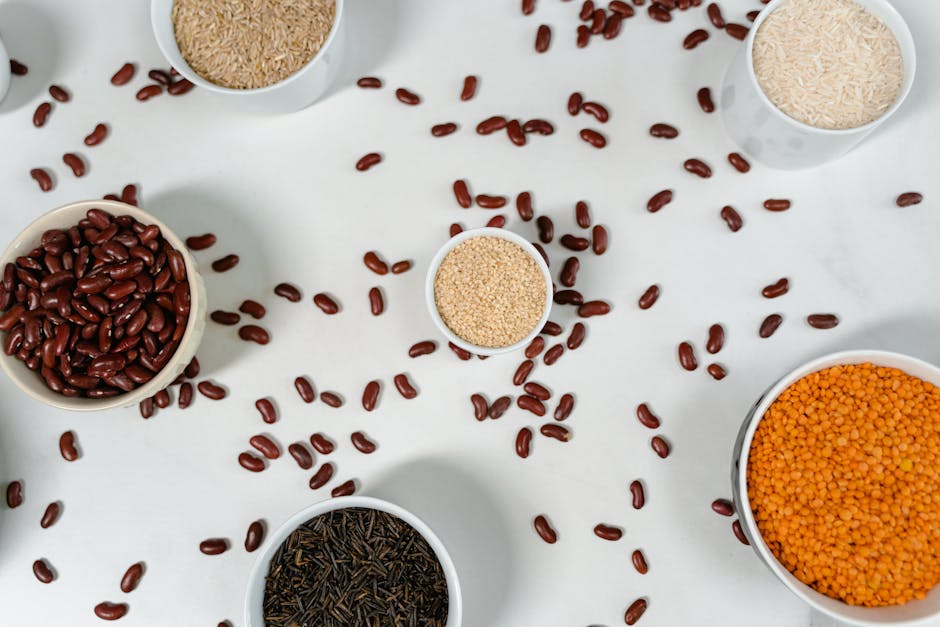
Complete Amino Acid Sources for Vegans
All nine essential amino acids are obtainable from plant foods, and a varied vegan diet reliably provides every one. The “incomplete protein” framing — the idea that you must combine specific plant foods at every meal to form a complete protein — originated in Frances Moore Lappé’s 1971 Diet for a Small Planet and was retracted by Lappé herself in the 1981 edition once the underlying biochemistry was revisited. Modern protein research, including the Indicator Amino Acid Oxidation (IAAO) method, confirms that mixed plant-protein diets fully meet adult amino acid requirements. This guide walks through the nine essential amino acids, the best plant sources for each, what “complete protein” actually means, and the science behind why per-meal combining is not required.
The nine essential amino acids
Of the 20 amino acids that make up human proteins, nine are essential — meaning the body can’t synthesise them and they must come from food:
- Histidine
- Isoleucine
- Leucine
- Lysine
- Methionine
- Phenylalanine
- Threonine
- Tryptophan
- Valine
A “complete” protein contains all nine in adequate proportions. Every plant protein contains all nine essential amino acids — what varies is the relative quantity of each. A protein with low relative quantities of one amino acid is described as having that amino acid as its “limiting” amino acid.
What “complete protein” actually means
The classification of a protein as complete or incomplete refers to the PDCAAS (Protein Digestibility-Corrected Amino Acid Score) or the more modern DIAAS (Digestible Indispensable Amino Acid Score) — both methods that compare a protein’s amino acid profile against human requirement patterns.
A protein with a PDCAAS of 1.0 is “complete” — meaning, with adequate digestibility, it meets all amino acid requirements per gram of protein at human RDAs. PDCAAS scores above 1.0 are truncated to 1.0 by convention.
Plant proteins with PDCAAS = 1.0 (complete by themselves):
- Soy protein isolate
- Quinoa
- Buckwheat
- Hemp seed (per some assessments)
- Amaranth
- Spirulina (high amino acid quality but inadequate quantity at typical doses)
Plant proteins with PDCAAS slightly below 1.0:
- Whole soybeans (~0.9)
- Other legumes (~0.6–0.7, low in methionine)
- Most grains (~0.4–0.6, low in lysine)
- Most nuts (~0.4–0.7, varying)
The “incomplete” tag for legumes and grains historically referred to PDCAAS below 1.0 — as standalone foods. In a varied diet that combines them, the amino acid profile becomes complete.
The complementary protein concept (and why per-meal combining isn’t required)
Lappé’s 1971 framing was that legumes (low in methionine, high in lysine) needed to be eaten at the same meal as grains (high in methionine, low in lysine) to form a complete protein. The 1981 retraction noted that this is not how amino acid metabolism works:
- Amino acids absorbed from a meal enter a free pool in the bloodstream
- The pool turns over over hours (not minutes)
- Protein synthesis draws on the aggregate amino acid availability across the day
- Combining is achieved across daily intake, not per-meal
The Academy of Nutrition and Dietetics’ 2016 vegetarian position paper states this directly: “Although it was previously thought that vegetarians needed to combine various plant proteins at each meal in order to obtain protein of high biologic value, current evidence indicates that this is not necessary.”
A varied vegan diet that includes legumes (lentils, chickpeas, beans) and grains (rice, wheat, oats) and nuts/seeds across the day reliably hits all nine essential amino acids in adequate quantity.
Best plant sources of each essential amino acid
Lysine
The amino acid most often “limiting” in plant diets — but easily covered by:
- Soy products (tofu, tempeh, soy milk, edamame) — the standout
- Legumes (lentils, chickpeas, beans)
- Pumpkin seeds
- Quinoa
- Pistachios
A vegan diet with daily legumes or soy is rarely lysine-limited.
Methionine
The amino acid often limiting in legumes; abundant in:
- Sesame seeds and tahini
- Brazil nuts
- Hemp seeds
- Sunflower seeds
- Oats
- Quinoa
Leucine, isoleucine, valine (BCAAs)
The branched-chain amino acids, important for muscle protein synthesis:
- Soy products (high)
- Lentils, beans (good)
- Oats, brown rice
- Pumpkin seeds, hemp seeds
- Peanuts, peanut butter
A practical pattern: legumes + grains + seeds covers BCAAs reliably.
Tryptophan
Often well-supplied:
- Soy
- Pumpkin seeds
- Tofu, tempeh
- Oats
- Buckwheat
Threonine, phenylalanine, histidine
Generally well-supplied across a varied vegan diet — these are rarely limiting.
A reference: protein content of common plant foods
| Food (1 cup cooked unless noted) | Protein (g) |
|---|---|
| Lentils | 18 |
| Black beans | 15 |
| Chickpeas | 15 |
| Edamame | 17 |
| Tofu, firm (½ cup) | 10 |
| Tempeh (3 oz / 85g) | 15 |
| Seitan (3 oz / 85g) | 18–25 |
| Quinoa | 8 |
| Oats, rolled (½ cup dry) | 5 |
| Brown rice | 5 |
| Whole wheat pasta | 8 |
| Hemp seeds (3 tbsp) | 9 |
| Peanut butter (2 tbsp) | 8 |
| Pumpkin seeds (1 oz / 28g) | 7 |
| Almonds (1 oz / 28g) | 6 |
| Vital wheat gluten (¼ cup) | 23 |
| Soy protein powder (1 scoop) | 15–25 |
| Pea protein powder (1 scoop) | 20–25 |
A vegan eating 2 cups legumes + 2 cups whole grains + 1 oz seeds + 1 cup tofu in a day takes in well over 80g protein — comfortably above RDA for an 80kg adult.
How much protein do vegans actually need?
Per NIH ODS:
- Adult RDA: 0.8 g/kg body weight per day (the floor for healthy non-active adults)
- Athletes / older adults / muscle-building goals: 1.2–1.6 g/kg per day per the International Society of Sports Nutrition position
- Pregnancy: ~1.1 g/kg per day
For an 80 kg adult, the RDA is 64g/day; an athletic or older adult target might be 96–128g/day.
The IAAO method studies (Phillips et al., 2017; Elango et al., 2010) suggest the standard RDA may slightly underestimate adult needs across the board (omnivore or vegan). A practical aim of 1.0–1.2 g/kg/day is a reasonable buffer for most adults.
Are vegan athletes getting enough protein?
The 2017 Journal of the International Society of Sports Nutrition position stand on diets and resistance training (Jäger et al.) explicitly addresses this: vegan athletes can meet protein and amino acid needs through varied plant sources combined with adequate calorie intake. Pea, soy, and rice protein blends in supplemental form are particularly useful for athletes targeting 1.6–2.2 g/kg.
Soy protein isolate has a leucine content (per gram of protein) close to whey protein, making it a viable post-training option for vegan athletes. Pea protein is high in BCAAs. Combined pea-and-rice blends approximate complete amino acid profiles.
See vegan athletes pillar for performance-specific guidance.
Plant protein digestibility
Digestibility (the D in PDCAAS/DIAAS) varies by plant food and processing:
- Soy isolate, pea isolate — ~95% digestibility
- Tofu, tempeh — ~88% digestibility
- Cooked legumes — ~75–85% digestibility
- Cooked whole grains — ~80–90% digestibility
- Raw legumes — much lower (and contain anti-nutrients; don’t eat raw beans)
Cooking, soaking, sprouting, and fermenting all improve plant protein digestibility.
Practical pattern for a complete-amino-acid vegan day
- Breakfast: oatmeal with soy milk + ground flaxseed + fruit (covers methionine, BCAAs, lysine via soy milk)
- Lunch: lentil and brown-rice salad with pumpkin seeds, lemon dressing (legume-grain combo, BCAAs from seeds)
- Dinner: tofu stir-fry with broccoli, cashews, and quinoa (high-quality complete protein from tofu + quinoa)
- Snack: hummus with carrots, or peanut butter on whole-wheat toast
Total protein: 70–90g. Aggregate amino acid profile: complete.
What about specific protein-pairing rules?
You can ignore them. The 1971 protein-combining tables are a historical curiosity, not a current nutrition rule. Eat varied plant proteins across the day. Aggregate intake is what matters.
Bottom line
- Every plant protein contains all nine essential amino acids. Quantity varies; presence does not.
- Aggregate daily intake covers complete amino acid needs in any varied vegan diet.
- Per-meal protein combining is not required — the 1971 framing was retracted in 1981.
- Soy, quinoa, buckwheat, hemp, and amaranth are PDCAAS-complete by themselves. Other legumes and grains are completed by combination across the day.
- Adult protein needs of 0.8–1.6 g/kg are achievable on a varied vegan diet with adequate calorie intake.
See also: vegan macros: protein/fat/carbs/fibre split, vegan athletes pillar, and protein powder hub.