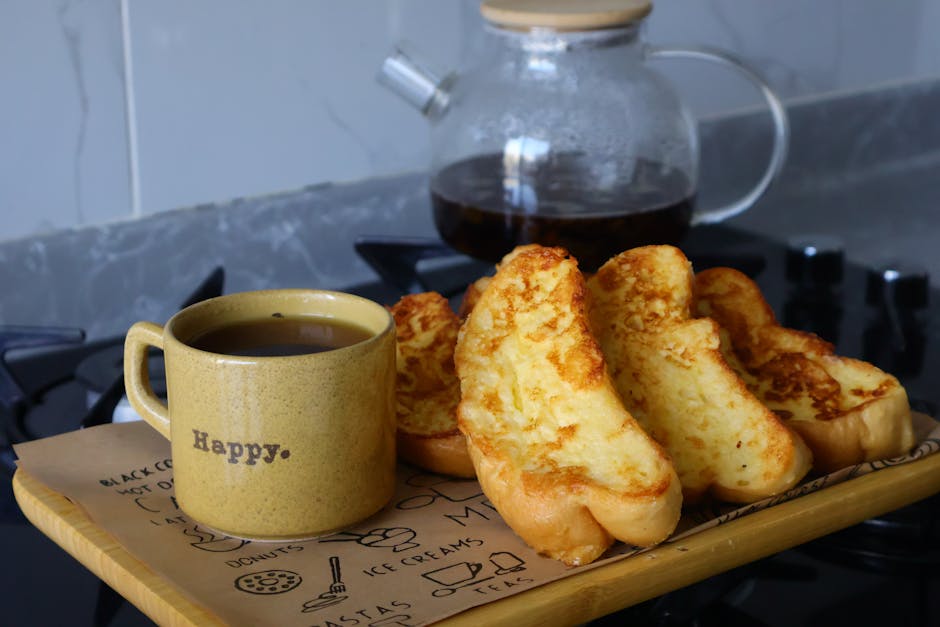
Vegan French Toast (Crispy, Custardy, 15 Minutes)
Crispy on the outside, custardy on the inside, and genuinely satisfying — vegan French toast uses chickpea flour and black salt (kala namak) in the batter to replicate the eggy flavor and binding properties of eggs. The technique is the same as traditional French toast: dip the bread in the batter, fry in a hot pan, and serve with maple syrup. The chickpea flour creates the custardy interior that sets as it cooks.
Ingredients
- 4 thick slices of bread (brioche-style, sourdough, or challah-style — stale bread works best)
- ½ cup (120 ml) plant-based milk (oat milk or soy milk)
- 2 tablespoons chickpea flour (also called besan or gram flour)
- ½ teaspoon black salt (kala namak) — regular salt if unavailable
- ¼ teaspoon turmeric (for color)
- 1 teaspoon maple syrup
- ½ teaspoon cinnamon
- ½ teaspoon vanilla extract
- Vegan butter or coconut oil for frying
To serve:
- Maple syrup
- Fresh berries
- Powdered sugar (ensure vegan)
- Whipped coconut cream
Method
- Make the batter. Whisk together plant-based milk, chickpea flour, black salt, turmeric, maple syrup, cinnamon, and vanilla until smooth. No lumps. The chickpea flour will thicken slightly as it sits — this is fine.
- Use stale bread. Day-old or stale bread absorbs the batter without becoming soggy and falling apart. Fresh bread soaks up too much liquid and gets mushy. If your bread is fresh, spread it on a baking sheet and put it in a 200°F (95°C) oven for 10 minutes to dry it out slightly.
- Dip the bread. Pour the batter into a wide, shallow dish. Dip each slice of bread for 15–20 seconds per side — enough to absorb the batter but not so long that it disintegrates.
- Fry on medium heat. Heat vegan butter in a non-stick skillet over medium heat. Add the soaked bread slices. Cook for 2–3 minutes per side until deep golden brown. Don’t rush with high heat — the inside needs time to set while the outside browns.
- Check doneness. The French toast is done when both sides are golden brown and the center feels firm (not liquid) when pressed gently.
- Serve immediately. French toast loses its crispiness quickly. Serve straight from the pan with maple syrup and fresh berries.
Tips for Better Vegan French Toast
Stale bread is key. The denser, drier texture of stale bread holds up to soaking and frying. Brioche-style bread (or a thick-cut sandwich loaf) produces a custardy, rich result; sourdough produces a sturdier, chewier result.
Medium heat is correct. High heat browns the outside before the center firms up, leaving a liquid-y interior. Medium heat allows both outside and inside to cook properly.
Don’t skimp on the batter. The batter is what creates the custardy interior. Make sure the bread is evenly coated — check that the edges are soaked too, not just the flat faces.
Turmeric for color. The yellow tint from turmeric mimics the color of egg-based batter. It doesn’t affect the flavor at these small quantities.
Variations
Cinnamon sugar: After frying, brush with melted vegan butter and dip in a plate of cinnamon and sugar. Carnival-style.
Stuffed French toast: Use two slices per portion — spread vegan cream cheese and sliced strawberries on one slice, top with the other to make a sandwich, then dip and fry.
Overnight baked: Line a baking dish with bread slices. Pour batter over. Refrigerate overnight. Bake at 375°F (190°C) for 25–30 minutes for a French toast casserole. Serves 4–6.
FAQ
Can I make French toast without chickpea flour? Yes — use cornstarch (1 tablespoon per ½ cup of milk) as a thickener. Or use silken tofu blended with plant milk (2 tablespoons silken tofu per ½ cup milk). Chickpea flour is the most reliable.
Does vegan French toast taste eggy? With black salt (kala namak), yes — the sulfur compounds in black salt produce a genuine eggy aroma and flavor. Without it, the French toast is very good but doesn’t have the eggy quality.
Serve alongside vegan banana pancakes for a weekend brunch spread. Browse all vegan breakfast recipes at the breakfast hub.