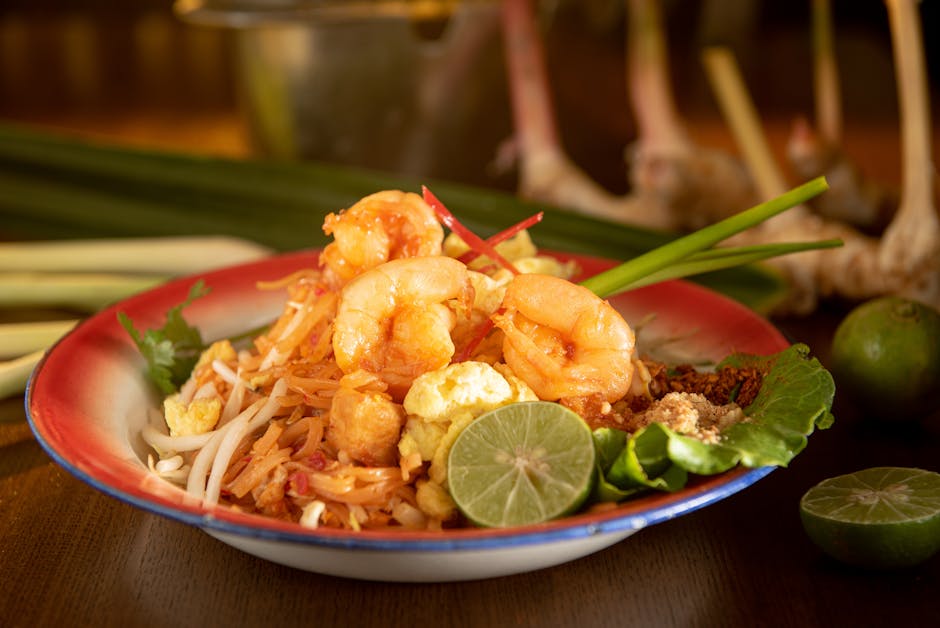
Vegan Pad Thai (Authentic Technique, 25 Minutes)
Pad thai is built on three elements: rice noodles, a balance of sweet-salty-sour-savory sauce (tamarind, soy sauce, sugar), and the wok-charred texture that comes from high heat and minimal stirring. The classic version uses egg and fish sauce; this vegan version replaces egg with scrambled tofu and uses tamari instead of fish sauce. The result has the same character: rich, slightly sweet, tangy, and satisfying.
Ingredients
Pad thai sauce:
- 3 tablespoons tamarind paste (from a block — preferred) or 2 tablespoons tamarind concentrate
- 2 tablespoons tamari or soy sauce
- 1 tablespoon maple syrup or brown sugar
- 1 tablespoon rice vinegar
- 1 tablespoon sriracha or sambal oelek (optional — adds heat)
Pad thai:
- 7 oz (200 g) dried flat rice noodles (¼-inch / 5mm width)
- 1 block (7 oz / 200 g) firm tofu, pressed and crumbled
- ¼ teaspoon turmeric
- 3 tablespoons neutral oil
- 3 garlic cloves, minced
- 2 green onions, sliced (white and green parts separated)
- 2 cups (180 g) bean sprouts
- 2 tablespoons neutral oil for stir-frying
Toppings:
- ¼ cup (35 g) roasted peanuts, roughly chopped
- Fresh lime wedges
- Fresh cilantro
- Extra sriracha
Method
- Soak noodles. Soak dried rice noodles in room-temperature water for 30 minutes (or according to package directions). They should be pliable but still slightly firm — they’ll finish cooking in the wok. Don’t boil them.
- Mix sauce. Whisk tamarind paste, tamari, maple syrup, rice vinegar, and sriracha. Set aside. If using tamarind from a block, dissolve 2 tablespoons in ¼ cup of hot water and strain.
- Scramble tofu. Heat 1 tablespoon of oil in the wok or large skillet over high heat. Add crumbled tofu with turmeric; cook 3–4 minutes until lightly golden. Remove and set aside.
- Cook aromatics. Add 2 tablespoons of oil to the same wok over high heat. Add white parts of green onion and garlic. Stir fry for 30 seconds.
- Add noodles. Drain soaked noodles. Add to the wok. Add the sauce. Toss to coat — work quickly, as the sauce reduces fast.
- Cook noodles. Let noodles sit in contact with the hot wok for 30–60 seconds without stirring to get slight char. Toss. Repeat. If noodles stick, add a tablespoon of water.
- Return tofu. Push noodles to the side. Add tofu back in. Toss together.
- Add bean sprouts. Add bean sprouts. Toss briefly — 30 seconds. Bean sprouts should stay crunchy.
- Serve. Plate immediately. Top with peanuts, green onion tops, cilantro, and lime wedges.
Tips
High heat. This is where the wok-charred flavor comes from. The noodles need to sizzle and char slightly.
Don’t over-soak noodles. Soak until pliable, not cooked. Over-soaked noodles become mushy in the wok.
Tamarind paste is the key flavor. The sweet-sour character of pad thai comes from tamarind. Substituting with lemon juice produces a very different result. Tamarind blocks are available at most Asian grocery stores and online.
Push-to-the-side technique. Adding tofu (or eggs in the traditional version) to the side of the wok rather than mixing it with everything else prevents the noodles from absorbing all the liquid.
Work quickly. Pad thai moves fast — have all ingredients measured and ready before you start cooking.
Variations
Peanut noodles: Replace the tamarind sauce with a peanut sauce (3 tbsp peanut butter + 2 tbsp soy sauce + 1 tbsp lime juice + 1 tsp ginger + warm water to thin). Different character but equally satisfying.
Tempeh pad thai: Replace tofu with crumbled steamed tempeh.
Extra vegetables: Add julienned carrot, bell pepper, or thinly sliced cabbage with the aromatics.
FAQ
What’s in tamarind paste? Tamarind is a tart tropical fruit used in South and Southeast Asian cooking. The paste is made from the fruit pulp dissolved in water. It provides the characteristic sour-fruity flavor of pad thai.
Can I use regular spaghetti? Technically yes, but it’s a very different dish. Rice noodles have a specific texture and absorb the sauce differently. For an authentic pad thai, use flat rice noodles.
For another Asian-inspired vegan noodle dish, see the vegan tofu stir fry. Browse all vegan main meals at the main meals hub.