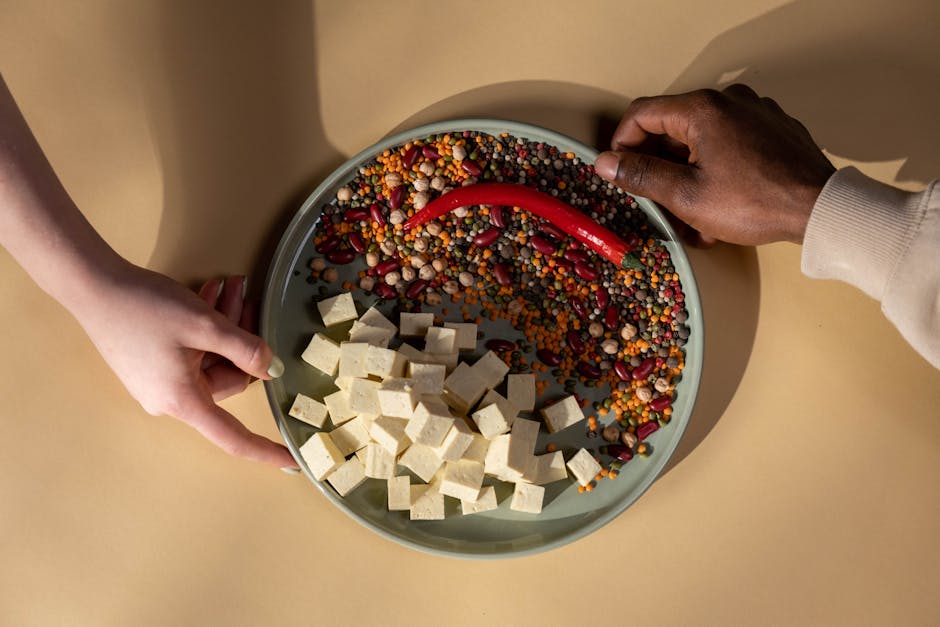
Vegan Iron: Foods, Absorption, and What Actually Works
Plant iron is non-heme iron, which has lower bioavailability than the heme iron in animal foods — but it is fully sufficient for adult needs when total intake is adequate and absorption is supported through smart food pairing. The Academy of Nutrition and Dietetics’ 2016 position concluded that iron-deficiency anaemia rates are not significantly higher in vegetarians and vegans than in omnivores when diets are planned. This guide walks through the best plant iron sources, the vitamin-C pairing that makes a substantial difference, what reduces absorption, the RDA targets per NIH ODS, and when to consider testing ferritin.
How plant iron differs from animal iron
Iron in food comes in two forms:
- Heme iron — from haemoglobin and myoglobin in animal flesh; bioavailability ~15–35%
- Non-heme iron — found in plants, eggs, dairy, and supplements; bioavailability ~2–20% depending on diet context
Per NIH ODS, non-heme iron absorption is influenced more by the rest of the meal than the iron source itself. The same lentil curry can deliver substantially different absorbed iron depending on what’s eaten alongside it — vitamin C boosts absorption 2–3×, tea/coffee tannins reduce it ~60%, calcium reduces it ~40% within an hour either side.
The practical answer: plant iron is sufficient when paired well; it’s not sufficient when paired poorly.
RDAs: how much iron is needed
Per NIH Office of Dietary Supplements:
| Group | RDA |
|---|---|
| Adult men | 8 mg/day |
| Adult women (premenopausal) | 18 mg/day |
| Adult women (postmenopausal) | 8 mg/day |
| Pregnancy | 27 mg/day |
| Lactation | 9 mg/day |
| Children 4–8 | 10 mg/day |
| Adolescents (girls) | 15 mg/day |
| Adolescents (boys) | 11 mg/day |
The Institute of Medicine has historically suggested vegetarians and vegans aim for 1.8× these RDAs to compensate for non-heme bioavailability. With smart vitamin-C pairing, many vegans don’t need to hit 1.8× — but a buffer above the standard RDA is sensible.
Best plant iron sources
Per USDA and NIH ODS data:
| Food (1 serving) | Iron (mg) |
|---|---|
| Tofu, firm (½ cup) | 6.6 |
| Lentils, cooked (1 cup) | 6.6 |
| White beans, cooked (1 cup) | 6.6 |
| Spinach, cooked (½ cup) | 3.2 |
| Pumpkin seeds (1 oz / 28g) | 2.5 |
| Chickpeas, cooked (1 cup) | 4.7 |
| Quinoa, cooked (1 cup) | 2.8 |
| Cashews (1 oz / 28g) | 1.9 |
| Dark chocolate 70%+ (1 oz / 28g) | 3.4 |
| Fortified breakfast cereal | 4.0–18.0 |
| Tahini (2 tbsp) | 2.7 |
| Tempeh (3 oz / 85g) | 2.2 |
| Kale, cooked (1 cup) | 1.2 |
| Blackstrap molasses (1 tbsp) | 3.6 |
A sample iron-rich vegan day:
- Breakfast: fortified cereal with fortified plant milk + orange (vitamin C) — 8 mg + boost
- Lunch: lentil soup with capsicum/red pepper salad and lemon dressing — 7 mg + boost
- Dinner: tofu stir-fry with broccoli over quinoa — 9 mg + broccoli vitamin C
- Snacks: pumpkin seeds + dried apricots — 3 mg
Daily total ~27 mg with strong vitamin-C pairing throughout.
Vitamin C pairing: the most important absorption factor
Vitamin C (ascorbic acid) reduces dietary non-heme iron from Fe³⁺ to Fe²⁺ — the form better absorbed by the duodenum. Effect size is substantial: a meal with 75 mg vitamin C alongside non-heme iron absorbs 2–3× more iron than the same meal without.
High vitamin-C foods to pair with iron-rich meals:
- Citrus (orange ≈ 70 mg per medium fruit; lemon juice ≈ 7 mg per tablespoon)
- Capsicum/red pepper (190 mg per cup raw)
- Strawberries (85 mg per cup)
- Kiwi fruit (65 mg per fruit)
- Broccoli (80 mg per cup raw, slightly less cooked)
- Tomatoes (~25 mg per medium fruit; concentrated in tomato paste)
Practical patterns:
- Lentil soup with a squeeze of lemon — built-in pairing
- Hummus with capsicum sticks — built-in pairing
- Tofu stir-fry with broccoli and red pepper — built-in pairing
- Iron-fortified breakfast cereal with strawberries or orange juice — built-in pairing
- Dark chocolate with strawberries — built-in pairing
Cooking note: Vitamin C is heat-sensitive. Cooked broccoli has ~70% the vitamin C of raw; canned tomatoes retain less than fresh. The pairing still works at reduced potency.
What reduces iron absorption
Several food components reduce non-heme iron absorption:
Tea and coffee — polyphenols reduce iron absorption 60–80% when consumed with the iron-rich meal. Effect persists ~1 hour either side. Practical answer: drink tea/coffee between meals, not with iron-rich meals.
Calcium — high calcium intake at the same meal reduces iron absorption ~40%. Practical answer: if you take a calcium supplement, take it at a different time from your iron-rich meal.
Phytates (in legumes, grains, nuts) — bind iron in the gut. Soaking, sprouting, fermenting, and cooking partially reduce phytate content. The effect of phytates is partially offset by vitamin-C pairing.
Oxalates (in spinach, rhubarb, beets) — bind iron and other minerals. This is why spinach, despite being labelled iron-rich, delivers less absorbed iron than the raw number suggests.
Antacids and proton-pump inhibitors — reduce stomach acid, which non-heme iron requires for absorption. Discuss with prescribing GP.
Cast-iron cookware
A small but real factor: cooking acidic foods (tomato sauce, lemon-based dishes) in cast-iron pans transfers measurable amounts of iron to the food. Studies estimate 1–4 mg additional iron per serving of acidic foods cooked in cast iron. Not a primary strategy, but a useful adjunct.
When to test ferritin
Ferritin is the iron-storage protein measured to assess iron stores. It’s a more sensitive marker than serum iron alone.
Recommended testing:
- Baseline ferritin 6–12 months after starting a vegan diet
- Annual or biannual testing for premenopausal women, athletes with high training loads, blood donors, or anyone with fatigue/pallor symptoms
- Testing during pregnancy as part of standard antenatal care
Reference range varies by lab, but generally:
- <15 ng/mL — iron deficiency, regardless of haemoglobin
- 15–30 ng/mL — low; consider supplementation
- 30–100 ng/mL — adequate
- >200 ng/mL — possible iron overload (rare; flag with GP)
Ferritin can be transiently elevated by inflammation; if very high, additional testing rules out other conditions.
When to supplement iron
A daily multivitamin often includes 8–18 mg iron, which is fine for maintenance. Standalone iron supplementation should generally be guided by a blood test:
- Ferritin <30 ng/mL with symptoms: iron supplementation (ferrous sulfate, ferrous fumarate, or ferrous bisglycinate) typically starting at 30–60 mg elemental iron daily, taken between meals with vitamin C and away from calcium and tea/coffee. Re-test in 8–12 weeks.
- Asymptomatic ferritin in normal range: dietary improvement first, supplement if dietary changes don’t improve markers.
Excessive iron supplementation can cause nausea, constipation, and at very high doses (rare) iron overload. Don’t self-prescribe iron supplements long-term without testing.
Special cases
Athletes: High training volumes increase iron loss through sweat and minor gastrointestinal blood loss. Ferritin <40 ng/mL in athletes is associated with reduced training adaptation. Athletes with chronic fatigue should test.
Premenopausal women: Menstrual blood loss raises iron needs significantly. The 18 mg/day RDA is a meaningful target.
Blood donors: Each whole-blood donation removes ~200–250 mg iron. Frequent donors (3+ donations per year) should monitor ferritin.
Pregnancy: RDA jumps to 27 mg/day. Most prenatal vitamins include ~30 mg. Ferritin monitoring is part of standard antenatal care; supplement adjustment is common.
Practical takeaways
- Total daily intake matters more than per-meal sourcing. Aim for 18–24 mg/day for premenopausal women, 12–14 mg/day for adult men.
- Pair iron-rich meals with vitamin C. This is the single most impactful absorption strategy.
- Drink tea and coffee between meals, not with iron-rich meals.
- Take calcium supplements at a different time from iron-rich meals.
- Test ferritin 6–12 months in if you’ve transitioned to a vegan diet, and annually thereafter if premenopausal female, athlete, or symptomatic.
A planned vegan diet with these patterns covers iron needs for the great majority of adults.
See also: vegan B12 complete guide, vegan nutritional deficiencies watch list, and best vegan iron supplement.