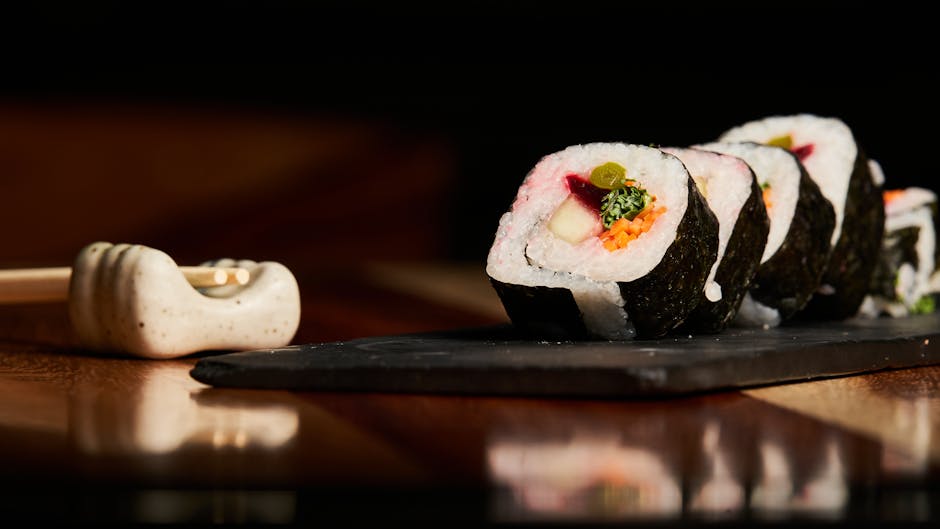
Is Sushi Vegan?
Most traditional sushi is not vegan — it contains fish, seafood, or roe. However, a meaningful selection of sushi options at most Japanese restaurants and grocery stores are vegan or easily made vegan: vegetable rolls, avocado rolls, cucumber rolls, and many specialty menu items. The sushi rice itself is typically vegan. The key is knowing which rolls to order and which condiments to check.
Sushi Components: Vegan Status
Sushi rice (shari) — Made from Japanese short-grain rice seasoned with rice vinegar, sugar, and salt. All three seasonings are vegan. Sushi rice is vegan.
Nori (seaweed sheets) — Dried seaweed from the ocean. Vegan.
Vegetables — Cucumber, avocado, carrot, burdock root (gobo), pickled daikon (takuan), sweet potato, asparagus — all vegan.
Fish and seafood — Tuna, salmon, shrimp, eel, octopus, crab — not vegan.
Roe (fish eggs) — Masago, tobiko, ikura — not vegan.
Tamagoyaki (egg omelet) — Thin egg omelette; not vegan.
Dashi-based sauces — Many Japanese sauces use dashi (fish-based stock); not vegan.
Vegan Sushi Options to Order
Rolls that are typically vegan:
- Kappa maki — Cucumber roll; rice, nori, cucumber
- Avocado roll — Rice, nori, avocado
- Ume shiso roll — Pickled plum and shiso leaf
- Oshinko roll — Pickled daikon roll; vegan
- Spinach roll (Horenso) — Blanched spinach in rice and nori
- Sweet potato roll — Tempura sweet potato, rice, nori
- Vegetable maki assortment — Most Japanese restaurants offer this
Check before ordering:
- Vegetarian California roll — Traditional California roll uses crab (real or imitation). Ask for avocado-only California roll to ensure no seafood.
- Inari sushi — Fried tofu pouch filled with sweetened rice. Usually vegan but dashi (fish stock) is sometimes used to season the tofu — confirm with the restaurant.
- Edamame — Usually boiled in salted water; vegan. Some restaurant preparations use fish-based salt or dashi — ask.
Sushi Condiments: What to Use and Avoid
| Condiment | Vegan? | Notes |
|---|---|---|
| Soy sauce / tamari | Yes | See is soy sauce vegan? |
| Wasabi (real) | Yes | Ground wasabi plant root; vegan |
| Wasabi (most restaurant) | Yes | Usually horseradish, mustard, and green dye; vegan |
| Pickled ginger (gari) | Yes | Ginger, rice vinegar, sugar; vegan |
| Ponzu sauce | Usually No | Contains dashi (fish stock) — confirm with restaurant |
| Eel sauce (unagi sauce) | No | Contains actual eel extract |
| Spicy mayo | No | Mayonnaise is egg-based; not vegan |
Ask for soy sauce and wasabi and skip the spicy mayo and eel sauce.
Ordering Vegan Sushi at Restaurants
Tips for eating vegan at a Japanese restaurant:
- Tell your server you don’t eat fish, seafood, eggs, or dairy — this is clearer than saying “vegan” in some restaurants
- Ask about dashi — many Japanese broths and sauces use dashi; request food prepared without it if possible
- Order vegetable maki platters — most sushi restaurants offer a set of vegetable rolls
- Look for tofu-based options — agedashi tofu, hiyayakko, and inari are potentially vegan if prepared without dashi
- Avoid crab sticks — “imitation crab” (surimi) contains fish
FAQ
Is seaweed salad vegan? Usually yes. Seaweed salad (wakame) is typically dressed with sesame oil, vinegar, soy sauce, and sugar — all vegan. Some restaurant preparations add bonito flakes (fish); confirm before ordering.
Is miso soup vegan? Traditional miso soup is made with miso paste dissolved in dashi (a broth made from kombu seaweed and katsuobushi, or dried bonito flakes — a fish). Most restaurant miso soup is not vegan. Some Japanese restaurants and health food restaurants offer vegan miso soup made with kombu-only dashi — ask.
Is sushi from the grocery store vegan? Pre-made grocery store sushi is usually not vegan — the most common offerings include California rolls (with crab or imitation crab), salmon rolls, and tuna rolls. Look for avocado rolls or cucumber rolls, which are usually vegan, at the grocery store sushi counter.
For more vegan lifestyle guidance, visit the lifestyle hub. More answers in the Is This Vegan? Q&A category.